Field services & trades/ Commercial HVAC service
Relon HVAC now sends invoices in a day and a half, not nine days
We built software that turns each technician’s job notes into a draft invoice for the office to approve. Invoices go out a week sooner, and far fewer parts go unbilled.
The company
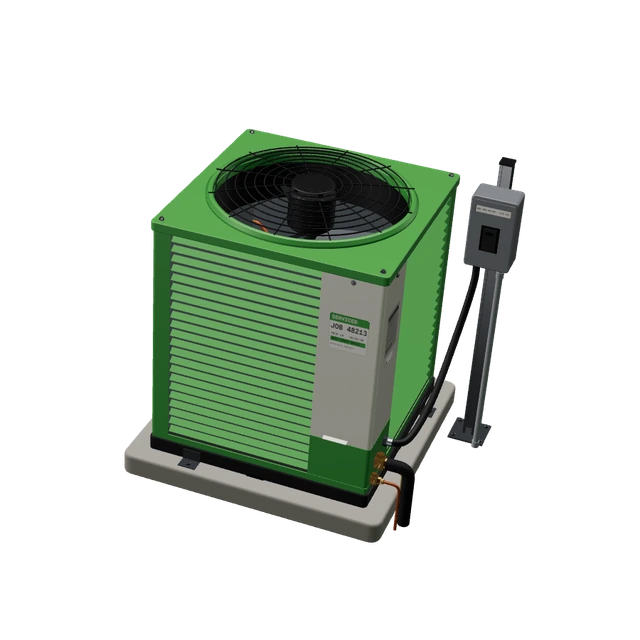
Relon HVAC is a founder-led contractor that services heating and cooling systems in commercial buildings across Texas. It has three branches, 95 technicians and about $48 million in yearly sales.
The problem
When a technician finishes a service call, they close the ticket with a few words, like “replaced cap, cleaned coil.” Then the office takes over.
A coordinator chases the technician to find out which parts they used. They check whether the work is covered by the customer’s maintenance agreement. Then they type up the invoice.
Jobs sat for a week or more. A typical invoice went out 9 days after the work was done, and about 70% of that delay was chasing technicians for parts and notes. Parts taken off the truck often never made it onto the bill at all. On 14 of every 100 jobs, parts were used but never charged for.
What we built
We built a tool that writes the invoice from the technician’s ticket. For every finished job, it:
- Reads the technician’s notes and photos, and the parts they used.
- Builds the invoice line by line.
- Checks each line against the customer’s service agreement.
- Puts the draft in a queue for a coordinator.
A coordinator approves every invoice. Anything outside the agreement is flagged for a person and never billed automatically.
How we built it
It started with a call with the owner and the office manager. Two days later, a first version turned 30 real closed tickets into draft invoices. Five of those 30 jobs turned out to have parts that were never billed.
Our engineers rode along on six service calls and spent four days with the billing team. The tool went live at one branch on day 15. The other two branches kept invoicing the old way.
What changed
We agreed to judge the work by one number: the days from finishing a job to sending the invoice.
Over the first 8 weeks at the pilot branch, across 3,600 jobs:
| What we measured | Before | After |
|---|---|---|
| Typical days from job done to invoice | 9 | 1.5 |
| Jobs with parts used but not billed | 14% | 3% |
| Invoices the customer disputed | 5.2% | 2.9% |
| Draft invoices sent with no changes | – | 61% |
Catching those parts recovered about $170,000 in parts and labor. Four weeks later, customers were paying in 47 days on average, down from 61.
At the two branches still on the old process, the wait only went from 9 days to 8.5. So nearly all of the change came from the new tool.
What went wrong
Once technicians saw invoices filling in on their own, they stopped adding photos. By week three, unbilled parts had crept back up to 8%.
We made the parts check a required step before a technician can close a ticket, and the number came back down.
More case studiesAll case studies →
-
Trucking & logistics2 min read →
Freeman Gas Suppliers grew revenue 32% in a quarter
-
Professional services3 min read →
An insurance agency now sends certificates in under 2 hours, not a full day
-
Industrial distribution2 min read →
Tungsten Diagnostics now answers quote requests in 9 minutes, not 6 hours
-
Manufacturing3 min read →
Fahrer Dynamics now confirms orders in 3.5 hours instead of 2 days
Start with one process.
Book a discovery call. We build the first version right after it.