Manufacturing/ Contract machining
Fahrer Dynamics now confirms orders in 3.5 hours instead of 2 days
We built software that reads each customer’s purchase order, checks it against the quote and drafts the order with a ship date for the team to approve. Confirmations went from more than two days to a few hours, and order mistakes fell by three quarters.
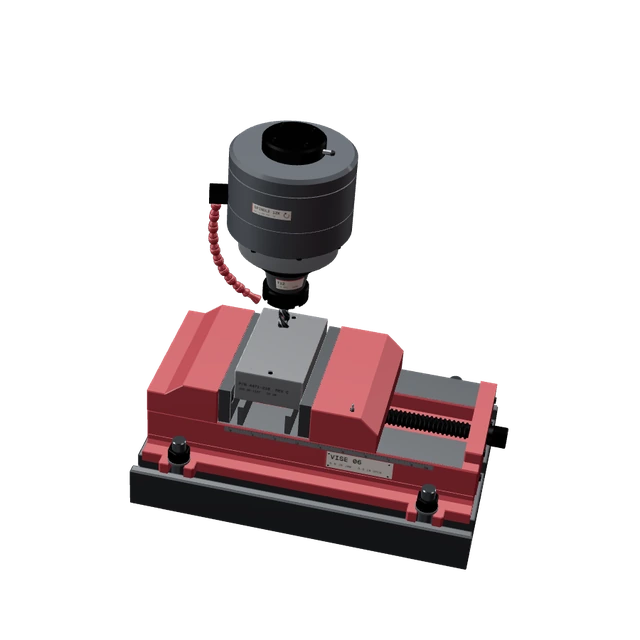
The company
Fahrer Dynamics is a family-owned shop that machines precision metal parts to its customers’ drawings. It has two plants in Ohio, 260 employees and about $62 million in yearly sales.
The problem
Customers send purchase orders in every format: PDFs, emails and exports from their own ordering systems. Many carry an old drawing revision or last year’s price.
The six-person customer service team typed each order into the business system by hand. Then someone walked over to the planner to ask when the parts could ship. A typical order took 2.3 days before the customer got a confirmation.
Mistakes slipped through, too. About 6 of every 100 orders went in with the wrong price, drawing revision or quantity, and each one meant a correction or a credit later. Most of those mistakes (58%) were drawing revisions that didn’t match. Another 27% were prices.
What we built
We built a tool that handles incoming orders. For every purchase order, it:
- Reads the order, in whatever format it arrives.
- Checks the part, revision, price and quantity against the quote and the business system.
- Flags anything that doesn’t match.
- Drafts the sales order and the confirmation, with a ship date based on the current schedule.
Someone on the customer service team approves every order before it goes in. The planner still owns the ship date. The software suggests one, and the planner can change it.
How we built it
It started with a call with their COO. Two days later, we ran a first version on 50 of their past orders. It flagged 9 of the 11 that had later needed a credit.
Our engineers then spent five days with the customer service team and the planner. Together we sorted out which mismatches matter, like a new revision or a different price at a higher quantity, and which ones don’t.
It went live for their top 15 customers on day 12, and for every customer by day 30.
What changed
We agreed to judge the work by one number: the time from a purchase order arriving to the customer getting a confirmation.
Over the first 12 weeks, across 2,450 orders:
| What we measured | Before | After |
|---|---|---|
| Typical time to confirm an order | 2.3 days | 3.5 hours |
| Orders entered with a mistake | 6.1% | 1.4% |
| Team hours on order entry each week | 74 | 31 |
| Orders flagged for a person to check | – | 22% |
Every customer went live within a month, so there was no group left on the old process to compare with. We compared with the 12 weeks before launch instead. Orders ran 8% higher during the pilot, which only made the result harder to reach.
What went wrong
At first, the suggested ship dates didn’t allow for work done outside the shop, like plating and heat treating. For three weeks, dates on plated parts came out about four days too early. The planner fixed each one by hand.
We added the outside vendors’ lead times for every step, so those dates now come out right.
More case studiesAll case studies →
-
Field services & trades3 min read →
Relon HVAC now sends invoices in a day and a half, not nine days
-
Trucking & logistics2 min read →
Freeman Gas Suppliers grew revenue 32% in a quarter
-
Professional services3 min read →
An insurance agency now sends certificates in under 2 hours, not a full day
-
Industrial distribution2 min read →
Tungsten Diagnostics now answers quote requests in 9 minutes, not 6 hours
Start with one process.
Book a discovery call. We build the first version right after it.